
























Mobile Chip Cleaning Failures? Three Filament Types Precisely Master Protection for Precision Manufacturing
As smartphone chips enter nanometer-scale precision manufacturing nodes, invisible Electrostatic Discharge (ESD) can easily breakdown micro-circuitry, attract dust, and cause chip failures or yield drops—presenting a major hidden hazard in the cleaning process. Cleaning consumables for semiconductor chips must remove dust without leaving marks or scratching components, while also strictly controlling static electricity.
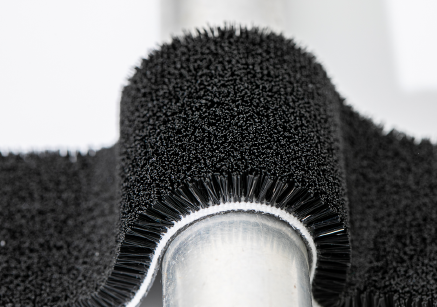
Tai Hing, with 40 years of deep expertise in industrial monofilaments, introduces three specialized filament series under the Nexfil brand: Anti-Static, Conductive, and Long-Term Anti-Static. These offer tailored solutions for different mobile chip cleaning conditions to safeguard chip production quality.
01 Conventional Chip Dust Removal | Anti-Static Filaments (Nexfil-AS)
Suitable for chip pre-treatment dusting, gentle cleaning of finished chips, and routine maintenance of modules and circuit boards, making it a cost-effective choice for mass production scenarios.
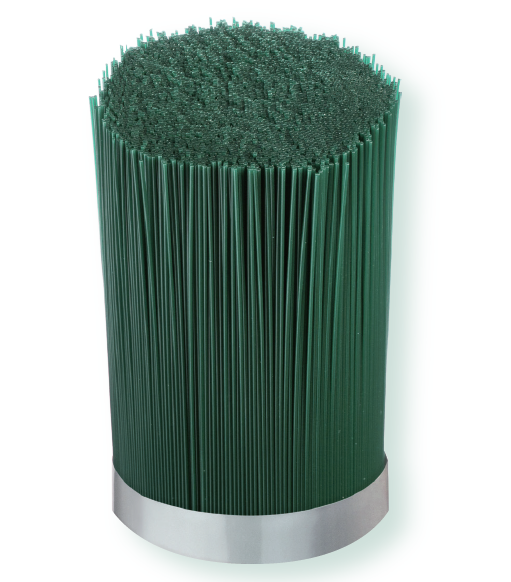
During production, anti-static agents are incorporated directly into PA6, PA66, or PBT base resins. The anti-static medium migrates to the plastic surface, where exuded anti-static molecules form a hydrophilic layer. By absorbing ambient moisture to dissipate static electricity, the surface resistivity is stably controlled between 10^11 ohm and 10^12 ohm. Compared with ordinary anti-static consumables, it delivers stable performance in both dry and humid cleanrooms.
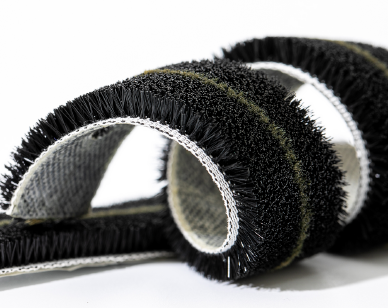
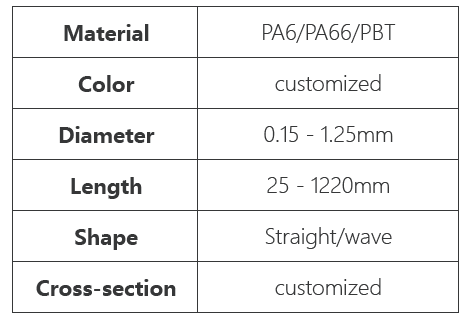
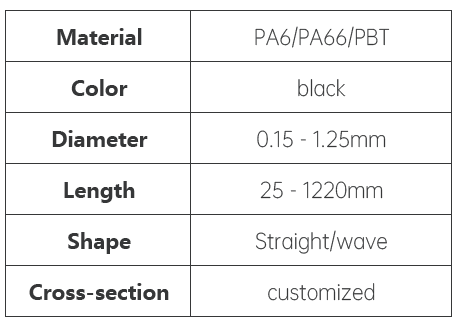
Available in diameters from 0.10 to 1.25 mm, with options for straight or crimped filaments. The filaments are flexible yet wear-resistant, preventing damage to sensitive chip coatings. Ideal for manual cleaning brushes and small dusting equipment, effectively mitigating electrostatic risks in standard manufacturing processes.
02 Static Elimination for High-Sensitivity Chips | Conductive Filaments (Nexfil-Conductive)
Designed for highly sensitive components like packaged ICs and bare wafers, where rapid static buildup exceeds the protection capabilities of standard anti-static filaments.
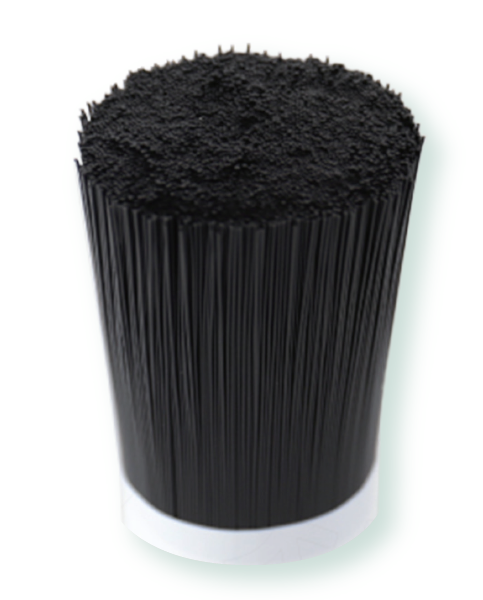
Tai Hing uniformly blends conductive carbon powder into PA6, PBT, or PP base polymers during high-temperature extrusion. By leveraging free electrons to rapidly divert static charges to ground, the surface resistivity drops to as low as 10^3 ohm to 10^5 ohm. This instantaneous charge dissipation eliminates the risk of ESD breakdown at the source.
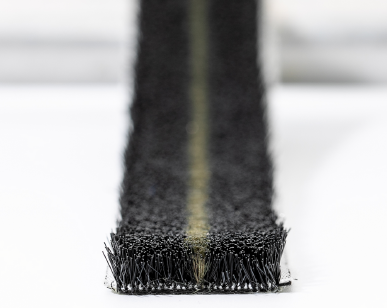
Balancing high conductivity with mechanical strength, these filaments offer excellent wear resistance, deformation resistance, and minimal shedding, making them ideal for continuous automated production lines. They are widely used for deep cleaning prior to chip packaging, SMT surface-mount, and inspection, preventing latent chip damage caused by charge accumulation. A comprehensive range of specifications is available to fit various automated precision cleaning brush heads.
03 Reliable Protection in Extreme Conditions | Long-Term Anti-Static Filaments (Nexfil-LTAS)
In ultra-cleanrooms with frequent temperature and humidity fluctuations, traditional migration-type anti-static filaments often experience performance degradation within 1 to 6 months, driving up consumable replacements and downtime costs. Nexfil-LTAS was engineered specifically for demanding, high-end chip processing conditions.
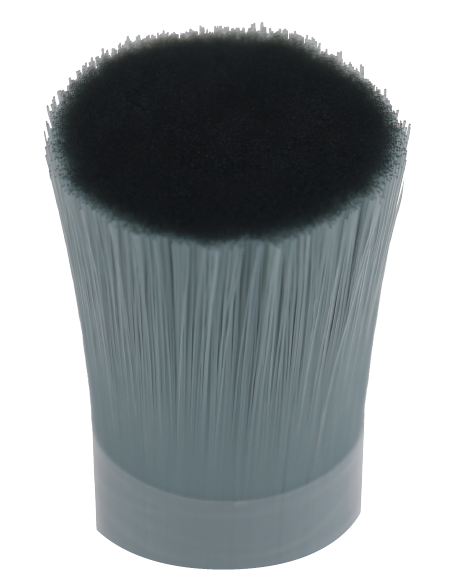
Unlike surface-migrating or spray-coated treatments, a stable polymeric network structure is built into the core of the filament. Its anti-static performance remains unaffected by ambient humidity, maintaining a consistent resistivity between 10^6 ohm and 10^12 ohm. It delivers long-term static control regardless of humid rainy seasons in the south or dry winter conditions in the north.
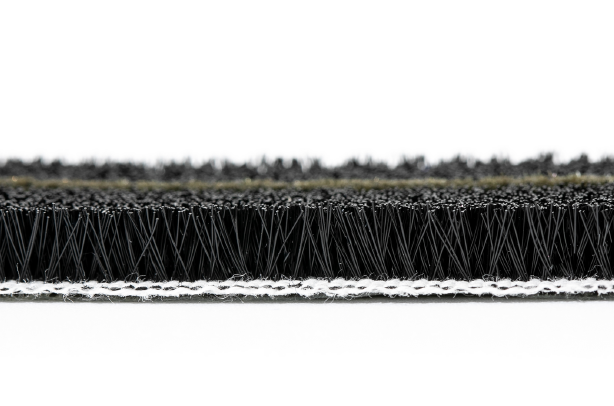
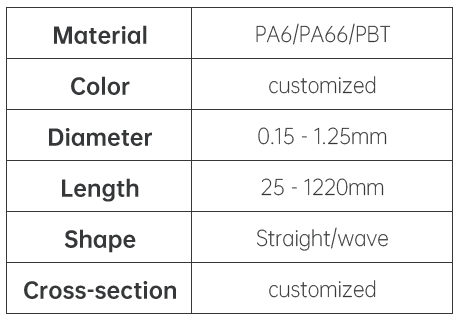
Suitable for wafer cleaning and embedded equipment dusting for flagship smartphone chips, AI computing chips, and optical sensor chips. Compatible with PA6, PA66, PA610, PA612, and PBT base materials, it offers superior flexibility and bend recovery. The extended service life reduces consumable expenses and downtime losses, providing a long-term cost-reduction solution for high-end precision manufacturing.
With 40 years of dedicated focus on monofilament manufacturing, Tai Hing Nylon's three specialized filament solutions cover electrostatic protection across all mobile chip cleaning scenarios—supporting precision manufacturing processes, safeguarding chip quality, and driving efficiency and quality in the consumer electronics industry.


